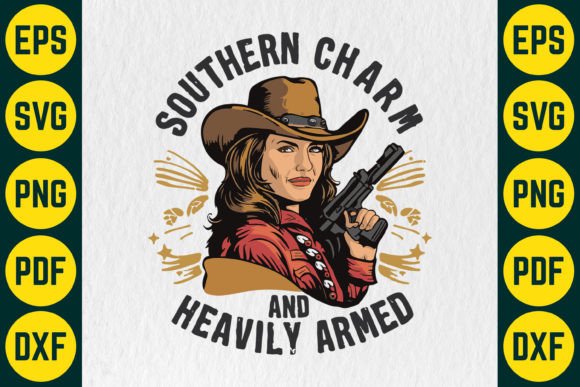
Southern Charm and Heavily Armed Design
As a designer who spends more time staring at stitch patterns than sleeping, I have learned to trust my gut before I ever load an embroidery file into the machine. There is a specific tension in creating designs that balance aesthetic appeal with technical feasibility, especially when dealing with themes that lean heavily into character. When I first pulled up the Southern Charm and Heavily Armed Design, I didn’t just see a graphic; I saw a potential brand statement for a boutique shop or a personalized gift that could easily become a bestseller. However, turning a digital asset into a tangible handmade product requires more than just hitting the start button. It requires understanding how the design will behave under the needle.
The First Impression: Mood and Visual Personality
The moment you look at this piece, the vibe is unmistakable. It taps into the popular "Western Cowgirl" aesthetic but adds a layer of edgy humor that resonates well with modern crafters and small business owners. The title itself, Southern Charm and Heavily Armed Design, sets a tone that is both playful and bold. For an embroidery project, this means the visual hierarchy needs to be strong. You cannot afford for the intricate details to get lost in the stitching process.
From a design perspective, the layout feels balanced, likely utilizing a central focal point surrounded by decorative elements. This is crucial for custom apparel like t-shirts and sweatshirts, where the eye needs a clear place to land. The "fancy flourish style" mentioned in the source material suggests that there are delicate lines involved. In the world of machine embroidery design, flourishes can be tricky. They look beautiful in vector software, but on fabric, they require precision. If the line weight is too thin, the stitches may pucker or break. If it is too thick, the elegance is lost. My initial assessment is that this design has high commercial potential because it appeals to a specific demographic—those who appreciate Southern culture mixed with a rugged, independent spirit.
Real-World Application: Where Does This Fit?
I recently considered using this design for a batch of custom embroidered patches intended for a client’s craft fair booth. The goal was to create merchandise that felt personal yet professional. Here is how I envision Southern Charm and Heavily Armed Design performing across different mediums:
- Tote Bag Design: A canvas tote is the perfect canvas for this kind of artwork. The sturdy fabric can handle the weight of the stitches without distorting. Placing the design centrally on a natural-colored tote bag creates a striking contrast, making the thread colors pop. It serves as a walking advertisement for any Etsy seller looking to build brand recognition.
- Sweatshirt Embroidery: For colder months, a crewneck sweatshirt offers a cozy backdrop. The texture of the fleece complements the rustic Western theme. However, one must be cautious with the placement. A large chest print works best here, ensuring the design doesn’t stretch out during wear.
- Baby Embroidery: While the theme is edgy, adapting this for baby items requires a softer touch. Perhaps a smaller version on a onesie or a bib? It might feel slightly incongruous for a newborn, but for a toddler’s outfit, it could be a fun, unique choice. The key is scaling appropriately so the "heavily armed" aspect remains humorous rather than aggressive.
- Holiday Embroidery: This design has surprising versatility for gifts. Imagine it on a tea towel or a kitchen apron for a hostess gift. The combination of charm and attitude makes for a memorable present that stands out from typical floral or seasonal motifs.
Technical Considerations and Potential Pitfalls
No design is flawless until it has been tested. With Southern Charm and Heavily Armed Design, there are several areas where a designer might encounter challenges. Understanding these helps avoid costly mistakes and ensures customer satisfaction.
Stitch Density and Detail
The description mentions "fancy flourish style," which implies the use of satin stitch and potentially running stitch for fine details. High stitch density can cause puckering, especially on lighter fabrics. If the design includes dense fill areas, you need a robust stabilizer. I always recommend testing the design on scrap fabric that matches your final project material. Check the edges of the satin stitches—are they clean, or are there gaps? Are the running stitches visible enough, or do they disappear into the fabric weave?
Fabric Compatibility
This design should be used carefully on textured or stretchy fabrics. Stretchy materials, like certain jersey knits used in custom apparel, can distort the shape of the embroidery if not stabilized correctly. Similarly, highly textured fabrics like chenille or heavy tweed might hide the finer details of the design. For the best results, stick to smooth, tightly woven fabrics such as cotton twill, denim, or canvas. These surfaces allow the thread colors to shine and maintain the integrity of the design’s lines.
Color Contrast
Visual appeal in embroidery is largely about contrast. If you are embroidering on dark fabric, you need light or metallic threads to make the design pop. Conversely, on white or light backgrounds, darker threads provide definition. I advise checking the design in black and white mockups to ensure that the value differences are sufficient. If the design relies on subtle shading, it may not translate well to embroidery, which typically uses solid thread colors.
Practical Tips for the Designer
Before committing to a full production run, follow these steps to ensure your finished product looks professional:
- Test on Scrap Fabric: Always run a test stitch-out. This reveals issues with tension, registration, and fabric distortion early.
- Check Hoop Size: Ensure the design fits comfortably within your machine’s hoop size. If it is borderline, consider resizing or adjusting the placement to avoid cutting off important details.
- Inspect Small Details: Zoom in on the digital file. Are there tiny elements that might not stitch well? Sometimes, simplifying a detail digitally before digitizing can save hours of troubleshooting.
- Confirm Licensing: As a commercial embroidery practitioner, it is vital to confirm licensing before selling finished items. Verify whether the digital embroidery file allows for commercial use of the physical products you create. This protects your craft business from legal issues.
- Use Proper Stabilizer: Depending on the fabric, choose between cut-away, tear-away, or wash-away stabilizers. A good stabilizer is invisible in the final product but essential during the stitching process.
Final Thoughts on Value and Appeal
The Southern Charm and Heavily Armed Design has the makings of a strong addition to any design assets library. It speaks to a niche audience that values personality and authenticity. For small shop product creators, this design can elevate a simple item into something special. It adds a narrative to the garment or accessory, inviting conversation and connection.
However, success lies in execution. The difference between a amateur-looking embroidery and a professional one often comes down to attention to detail—thread quality, stabilizer choice, and precise hooping. By treating this design with respect and testing it thoroughly, you can create personalized gifts and boutique branding items that customers love. Whether you are an Etsy seller looking to expand your catalog or a hobbyist making a unique gift for a friend, this design offers a blend of charm and edge that is hard to beat. Just remember: the design is only as good as the stitch work behind it.